The SANDA Review : July Intelligence Brief
Visibility is no longer enough to secure market share. This month's SANDA Review breaks down the digital-first strategies winning in today's global markets—from overcoming the 'shelf space trap' in India to the TikTok-to-Amazon pipeline driving Korean and Japanese beauty growth in the US. Read our latest strategic observations to architect a resilient, digital launch-to-omnichannel strategy.
07.02.2026 | The Shelf Space & Visibility Trap
In India, Visibility Doesn’t Equal Velocity.
Why being seen ≠ being sold.
Look at British giant LUSH. Very famous worldwide. But their first time entering India years ago was very short-lived. They had the hype, but that alone wasn't enough. The old retail model and hard logistics killed their speed, and they had to exit.
Now, in 2026, they returned. But with a new playbook, digital-first, and fast logistics. They finally understood that Indian buyers no longer look to luxury malls waiting for foreign brand names. They buy on quick platforms now.
Many foreign brands believe that solely securing prime shelf space and getting listings on top platforms in India is the end game. It is not. Just getting visibility is not enough to win the Indian market. There are many other variables at play here.
07.09.2026 | USA E-Commerce Growth
TikTok Shop and Amazon.com are reshaping the US beauty industry. TikTok fuels viral discovery and impulse buying, and Amazon is the ultimate restock-stop. Together, they account for a massive and growing share of all cosmetics and skincare sales in the US.
TikTok Shop USA: The Discovery Engine
TikTok Shop in the US has seen rapid growth in Creator-Driven Sales, driven by the Halo effect of hyped viral products.
Entire categories of beauty have been defined by TikTok Shop in the US, most notably the K-Beauty or Korean Beauty category.
Amazon.com: The Replenishment Giant
Amazon continues to dominate beauty e-commerce, accounting for nearly half of all online beauty and personal care sales.
At the same time, it's evolving beyond convenience—bringing premium brands into its Premium Beauty Store. Brands like Clinique and Too Faced from Estée Lauder now feature prominently in Amazon's Premium Beauty Store.
While TikTok is for impulse discovery, Amazon is where consumers go to quickly and reliably replenish their everyday staples and read product reviews.
06.16.2026 | K-Beauty's rise in the US
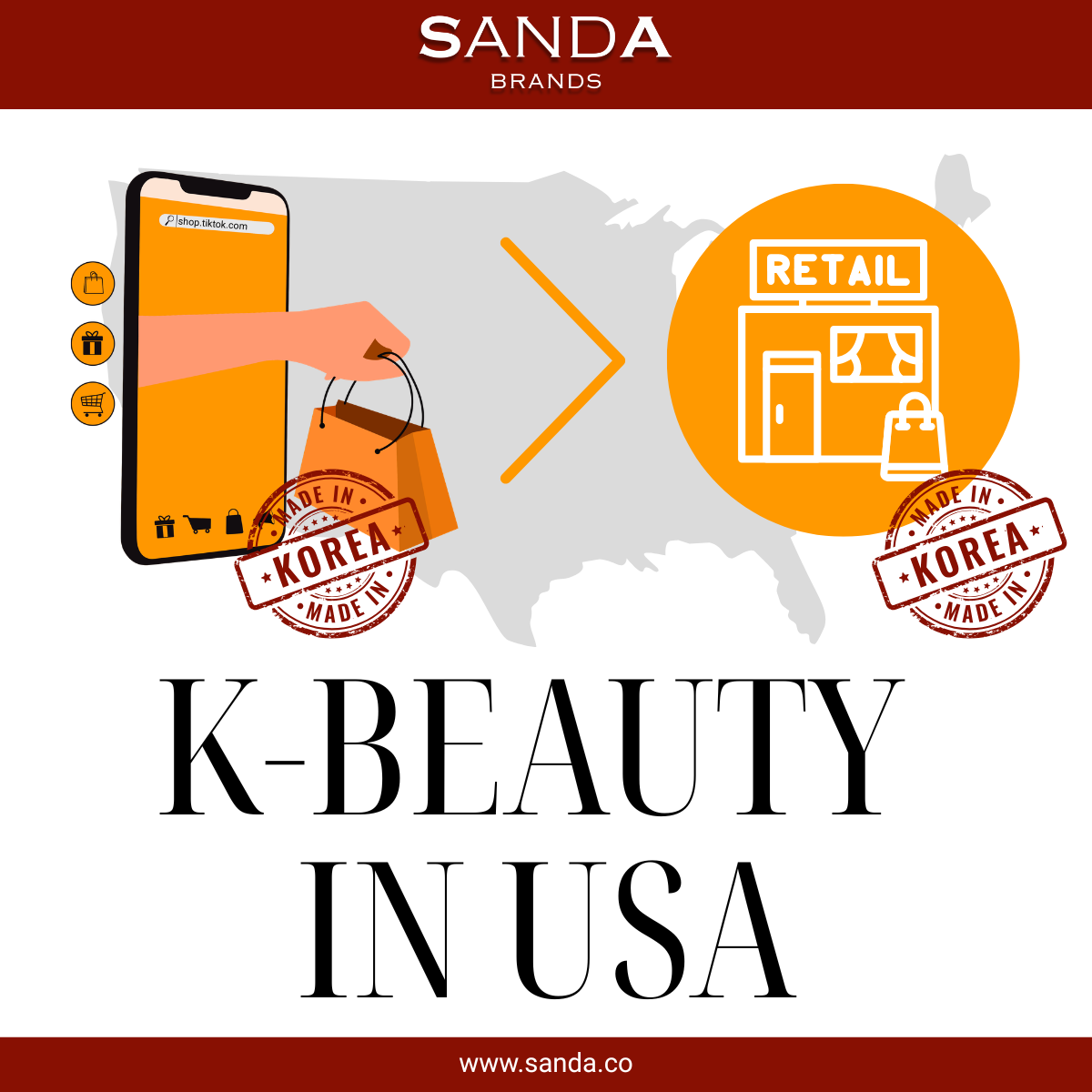
K-Beauty's rise in the US didn't lead with a big retail entry; for example, brands like Medicube and Anua built traction on TikTok Shop first, and Amazon, Sephora, Ulta, and Costco followed after demand was already proven. Costco now stocks over 50 K-Beauty brands.
This is increasingly becoming the core of a good Korean Beauty Brand Growth Strategy. Retail placement is now the finish line, not the entry point. K-beauty in the US is expected to grow at a rate of 9.5% CAGR through 2033, with hair-care emerging as the fastest-growing segment as skin-care leads the market right now.
This is the Beauty Brand Expansion that Sanda helps Brands and Brand Founders with their Global Market Entry Strategy for the US.
07.23.2026 | Japanese Beauty in the US
How many Japanese beauty brands in the USA can you name? Shiseido, Tatcha . . . and maybe one or two more?
Most brands treat Global Market Entry Strategy as a translation exercise, adjusting just the packaging, pricing, and then shipping the product. This does not help a foreign brand earn consumer trust, shelf space, or search visibility in a market that already has hundreds of brands competing for the same consumer.
E-commerce is growing faster than any other channel in this category. E-commerce is a channel where a brand from Tokyo does not need to win a retail buyer's trust before it can start selling and building proof.
If you're a Japanese, Korean, or any international beauty brand looking at the US and if your growth isn't matching home country growth, sequencing is usually the answer.